
 By Aish Huzaifa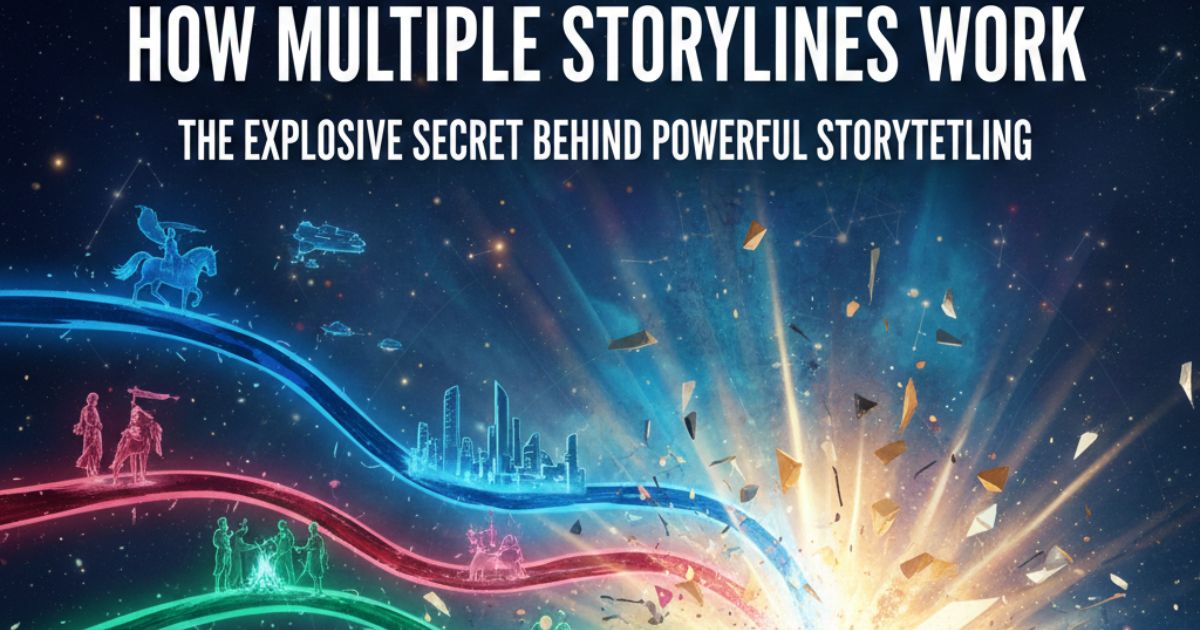
Have you ever noticed how some stories feel bigger, deeper, and more real? That’s usually because they don’t follow just one path. How Multiple Storylines Work is all about weaving different characters, conflicts, and perspectives into one powerful narrative. When these story threads connect, they create suspense, emotion, and meaning that stays with the reader. In this article, we’ll break it down in a simple way so you can understand and use this technique in your own writing.
Understanding the Concept
How Does “Your Topics Multiple Stories” Work?
Imagine you have a giant diamond. If you look at it from one side, it sparkles a certain way. But if you turn it, you see a totally different sparkle. Your Topics Multiple Stories works just like that diamond. Instead of looking at a subject from just one boring spot, you walk around it. You tell the story from the top, the bottom, and the sides.
It isn’t about changing the facts. It is about using layered stories to show the whole picture. You take one big idea like “Healthy Eating,” and break it into smaller pieces. One story might be about tasty recipes, another about how food gives you energy, and a third about farmers growing veggies. Suddenly, that one big topic becomes a whole world to explore.
Why Are Multiple Stories Better Than a Single Narrative?
Have you ever heard a story that just felt… flat? That happens when there is only one voice. A single narrative is like a song with only one note. It gets boring fast.
Multiple stories add flavor. They let you reach different people. Maybe your friend loves the science part, but you love the personal adventure part. By sharing diverse narratives, you give everyone something to hold onto. It makes your message stickier because it feels real and complete, not just a quick summary.
The Psychology Behind Multi-Narrative Storytelling
Our brains love connections. When we hear different stories about the same thing, our minds start connecting the dots. It’s like solving a puzzle. This multi-angle storytelling builds trust because it shows you aren’t hiding anything. You are sharing the full truth, and that makes people feel safe and ready to listen.
Benefits of Using “Your Topics Multiple Stories”
So, why go to all the trouble of telling stories from different angles? The rewards are huge, and they make your ideas shine brighter than ever.
How It Enhances Audience Engagement
Think about your favorite TV show. You don’t just follow one character, right? You get to see the story unfold through many eyes. That’s what makes it exciting! Your Topics Multiple Stories does the same thing. It’s a powerful tool for audience engagement because it gives everyone a character or an idea to connect with. When you share stories that are funny, serious, scientific, and personal all at once, you pull people in and make them want to stick around. It’s like throwing a party where everyone’s favorite song is playing.
Building Trust and Credibility Through Layered Narratives
Telling just one side of a story can sometimes feel like you’re hiding something. But when you use layered stories, you show that you’ve done your homework. This is a key part of storytelling for trust building. You’re showing your audience that you’re confident enough to explore a topic from every angle, not just the easy ones. This transparency makes people see you as a credible source they can rely on. It proves you’re not just shouting an opinion; you’re sharing a well-rounded view.
Why Multi-Narrative Content Improves SEO and Visibility
This might sound a bit technical, but it’s actually simple. Search engines like Google love it when you cover a topic thoroughly. By creating multi-narrative content, you naturally use a wider range of words and answer more questions people might have. This helps more people find your content when they search online. It’s a great strategy for storytelling for SEO because you’re creating a rich web of information that search engines recognize as valuable.
Key Components of a Successful Multi-Narrative Strategy
To tell great stories from multiple angles, you need a game plan. Think of it like building with LEGOs, you need the right pieces and a good idea of what you want to create. Here are the key components that make a multi-narrative strategy work.
Topic Clusters: The Backbone of Multi-Narrative Content
This might sound fancy, but it’s super simple. Topic clusters are just groups of stories that all connect to one main idea. Imagine your main topic is “space exploration.” Your topic cluster would include separate stories about astronauts, planets, rockets, and maybe even aliens! This is the backbone of your strategy because it organizes your ideas and makes it easy for people to explore everything you have to share. It creates a neat little universe of information for your audience to get lost in.
How to Balance Depth and Simplicity in Storytelling
The trick to great storytelling is to go deep without getting confusing. You want to share amazing details, but you don’t want to bore your audience with a textbook. The best way to find balance is to focus on one clear point in each story. Don’t try to explain everything at once. Give your readers small, tasty bites of information. This keeps your content simple enough for everyone to enjoy while still offering the depth that makes it valuable.
The Role of Emotional Connection in Multi-Narrative Content
Facts are great, but feelings are what we remember. An emotional connection is the secret sauce that makes stories stick. Whether it’s a story that makes someone laugh, feel inspired, or even get a little sad, emotion is powerful. When you’re using a multi-narrative content approach, try to weave feelings into each angle. This is key to storytelling for emotional engagement. It turns your content from just information into an experience that truly connects with people.
Practical Applications Across Industries

You might be thinking, “This storytelling stuff sounds cool, but does it actually work in the real world?” The answer is a big, loud YES! From classrooms to your favorite online shops, people are using multiple stories to make big ideas easier to understand.
How Can “Your Topics Multiple Stories” Be Used in Education?
Let’s be honest, sometimes textbooks can be a bit of a snoozefest. But imagine learning about history not just by memorizing dates, but by hearing the story of a soldier, a queen, and a farmer who all lived at the same time. Suddenly, history feels like a movie! Your Topics Multiple Stories helps teachers turn boring lessons into exciting adventures. It lets students see a subject from every angle, which helps them learn faster and remember more. It’s like turning a flat map into a 3D globe.
Storytelling for Marketing: Building Brand Loyalty
Brands don’t just want you to buy their stuff; they want to be your friend. When a company uses storytelling for marketing, they stop shouting “Buy this!” and starts sharing stories that matter. Maybe a shoe company tells a story about the athlete who designed the sneaker, and another story about the recycled plastic they used to make it. These layered stories help build brand loyalty because you feel good about who you are buying from. You aren’t just buying shoes; you are joining their story.
Using Multi-Narrative Content in E-Commerce and Social Media
Have you ever seen a cool shirt online but didn’t know how to wear it? E-commerce sites use multi-narrative content to fix this. They show one shirt worn by five different people in five different ways. On social media, this works like magic. Instead of posting the same picture ten times, a brand can share ten different mini-stories about one product. It keeps their feed fresh and gives you more reasons to click “add to cart.”
Step by Step Guide to Implementing “Your Topics Multiple Stories”
Ready to become a master storyteller? Awesome! Getting started is easier than you think. You don’t need a magic wand, just a few simple steps to turn your big ideas into amazing stories that everyone will love. Let’s walk through the process together.
Researching Core Topics and Identifying Sub-Narratives
First, you need to pick your main adventure. This is your core topic, like “caring for pets.” Once you have your big idea, it’s time to find the smaller stories hidden inside. Think of it like being a detective. For “caring for pets,” your sub-narratives could be:
- Choosing the right pet for your family.
- Fun games to play with your dog.
- What to Feed Your Cat to Keep It Healthy.
These smaller stories are the building blocks of your multi-narrative content.
Developing Story Angles for Different Audience Segments
Next, think about who you’re talking to. A story for a new pet owner will be different from a story for someone who has had pets their whole life. You need to develop different angles. For the story about “fun games,” one angle could be for people with tiny apartments, while another could be for those with big backyards. This shows you understand your audience and care about giving them the right information.
How to Use Visual and Interactive Storytelling Techniques
Words are great, but pictures and videos are even better! Visual storytelling helps bring your ideas to life. You could show a video of a dog playing a game or an infographic of healthy cat foods. You can also make your content interactive. Ask questions, create polls, or make a fun quiz. These techniques make your audience feel like they are part of the story, not just watching from the sidelines.
Advanced Strategies for Multi-Narrative Content
Once you’ve mastered the basics, it’s time to add some superpowers to your storytelling. These advanced strategies will help you create even smarter, more engaging content that reaches people in exciting new ways. Think of these as the secret moves that take you from a great storyteller to a legendary one.
Leveraging AI Tools for Storytelling
Imagine having a super-smart robot helper who can suggest story ideas, check your grammar, and even help you write. That’s what AI tools for storytelling can do! These tools can analyze what your audience loves and give you ideas for new stories they might enjoy. They can help you come up with different angles for your topic or even create a quick first draft. It’s a great way to save time and brainstorm ideas you might not have thought of on your own.
How to Optimize Multi-Narrative Content for Voice Search
More and more people are talking to their devices, asking questions like, “Hey Google, what’s a good recipe for chocolate cake?” To get your stories heard, you need to think about how people talk. Optimizing for voice search means using simple, question-based phrases in your content. Instead of just writing “Dog Training Tips,” create a story that answers the question, “How do I teach my puppy to sit?” This makes it easy for voice assistants to find and share your helpful advice.
Using Data-Driven Insights to Refine Your Storytelling Approach
This might sound like something out of a spy movie, but it’s really simple. Data-driven insights are just clues that tell you what’s working. You can look at which of your stories gets the most views, likes, or shares. Did people love the funny story more than the serious one? Use that information to guide your next set of stories. It’s like being a detective, using clues to figure out what your audience wants more of. This helps you get better and better over time.
Future Trends in Multi-Narrative Storytelling
Even the best storytellers run into a few bumps in the road. Knowing what challenges to expect can help you stay on track and keep your stories clear and powerful. Here are a few common pitfalls and how to dodge them like a pro.
What Are the Pitfalls of Multi-Narrative Storytelling?
The biggest trap is confusion. When you tell too many stories at once without connecting them, it can feel like a tangled mess of yarn. Your audience might get lost and give up. Another pitfall is making the stories feel repetitive. If every story sounds the same, people will get bored. The trick is to make each story unique while still making sure it ties back to the main topic. It’s a balancing act between variety and consistency.
Managing Consistency Across Multiple Stories
To keep your stories from feeling disconnected, think of your main topic as the sun. Every smaller story is a planet that orbits around it. They all belong in the same solar system. Make sure each story shares a similar style, tone, and message. This helps your audience understand that even though the stories are different, they’re all part of the same big picture. A simple way to do this is to always link back to your core idea.
Avoiding Audience Overwhelm with Clear Structure
Imagine trying to drink water from a firehose; it’s too much at once! That’s what can happen if your content is disorganized. To avoid overwhelming your audience, give them a clear map. Use headings, lists, and short paragraphs to break up your content into bite-sized pieces. Guide them from one story to the next so they always know where they are and where they’re going. A good structure makes even the most complex topics easy and fun to explore.
Conclusion
Multiple storylines are not just a narrative technique, they’re a storytelling amplifier. They deepen emotion, heighten suspense, and allow readers to experience a story from multiple angles. When carefully structured, they create powerful intersections that leave lasting impressions. The key lies in balance, clarity, and thematic unity. Master this craft, and your storytelling won’t just unfold it will resonate.
FAQs
What are multiple storylines in storytelling?
Multiple storylines refer to a narrative structure where more than one plot thread unfolds within the same story. Each storyline may follow a different character, setting, or conflict, but they are connected by a shared theme, event, or ultimate resolution. Instead of relying on a single linear journey, this structure allows the writer to explore various dimensions of a story world. It creates layers, contrasts perspectives, and often builds suspense as readers anticipate how the threads will intersect.
Why do writers use multiple storylines?
Writers use multiple storylines to add complexity and richness to their work. This approach allows deeper character development because different arcs reveal different emotional angles. It also builds suspense by cutting between high-stakes moments. When done well, multiple storylines keep readers engaged, as they become invested in several journeys at once, eagerly waiting for the moment they converge.
How do multiple storylines connect without confusing readers?
Clarity comes from structure and intention. Strong writers anchor each storyline with clear character goals and distinct settings. Transitions are smooth, and connections are purposeful — whether through shared themes, mirrored conflicts, or eventual crossover moments. Consistent pacing and strategic cliffhangers also help guide readers without overwhelming them.
What are the challenges of writing multiple storylines?
One major challenge is maintaining balance. If one storyline feels weaker or less relevant, it can slow the entire narrative. Another challenge is pacing — switching too often can disrupt flow, while switching too late may reduce tension. Careful outlining and thematic consistency are essential to ensure that every storyline adds value to the overall story.
Can multiple storylines work in short stories or only novels?
While multiple storylines are more common in novels, films, and TV series, they can absolutely work in shorter formats. The key difference is scope. In short stories, writers typically use two tightly connected threads rather than several expansive arcs. Precision is crucial, as there is less space to develop each storyline, but when executed skillfully, the impact can be powerful and memorable.
